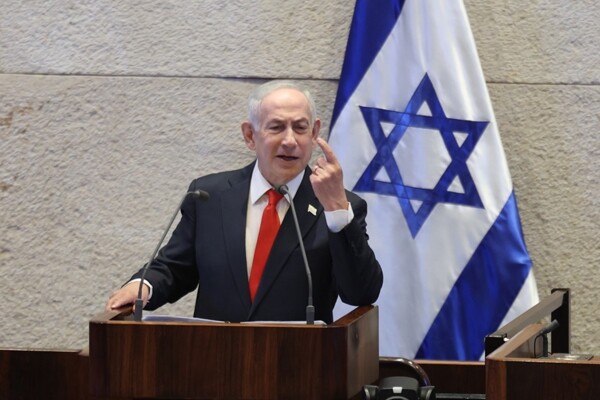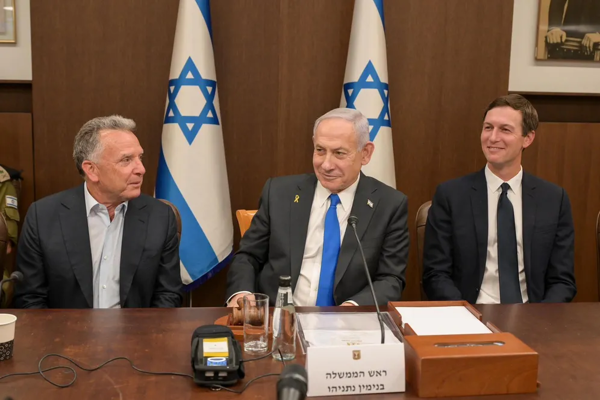
Hamas's refusal to hand over weapons puts verification mechanisms and the formation of a transitional authority on hold. This episode triggered a last-minute mediation between the United States and Prime Minister Benjamin Netanyahu and exposed tensions over the implementation of the peace plan promoted by Donald Trump. The immediate origin of the impasse dates back to mid-October, when Hamas killed Israeli soldiers Yaniv Kula and Itay Yavetz during a tunnel demolition operation. Israel seeks to ensure that any concession does not consolidate Hamas's military capabilities; the United States tries to preserve the ceasefire while validating its plan; and regional mediators seek to prevent a relapse into the spiral of war. Egypt, Turkey, and Qatar, facilitators for Hamas, accepted this framework as a working basis, while Israel exercises de facto control over the perimeter until a transitional authority is constituted. The core of the disagreement is how to resolve the fate of the trapped battalion. In parallel, Arab mediators proposed alternatives: a safe passage to northern Gaza under Hamas control or an exit abroad, in exchange for the destruction of military equipment and the handover of the bodies of murdered hostages. The equation is delicate. Hamas, for its part, announced that “there is no room for surrender or handing over to the enemy,” and demanded firm guarantees of ceasefire continuity as a prerequisite for any movement. Jared Kushner met in Jerusalem with Netanyahu, accompanied by Minister of Strategic Affairs Ron Dermer and advisor Aryeh Lightstone, without reaching an understanding. If Israel opts for force, the political process risks stalling, and mediators could recalibrate their role. Jerusalem, November 11, 2025 – Total News Agency-TNA – Negotiations on the immediate future of the Gaza Strip entered a critical phase when an estimated battalion of 200 Hamas militants became trapped in tunnels under the Rafah area, now under the effective control of the Israel Defense Forces (IDF). The U.S. administration decided to add special envoy Steve Witkoff to try to unstick the thorniest point of the scheme: the combination of surrender, withdrawal, and disarmament under international supervision versus the Israeli alternative of direct neutralization. The immediate outcome will have effects beyond Gaza. Donald Trump proposed a 20-point roadmap whose section 16 foresees that Israel will not occupy or annex Gaza and that, as an international stabilization force takes control, the IDF will withdraw behind the so-called “Green Line,” with milestones and deadlines linked to disarmament. The situation surprised the mediators, who were seeking to consolidate the ceasefire while advancing technical talks on disarmament and territorial control. In this context, the White House activated a political channel to sustain the ceasefire and advance demilitarization. The military response ordered by Netanyahu, notified to Washington, contained attacks from the Islamist group and revealed the presence of Hamas fighters enclosed in clandestine galleries under Rafah, Khan Younis, Shujaiyeh, and Beit Hanoun. The treatment the trapped battalion receives in the tunnels will determine whether diplomacy prevails or military logic is imposed on the negotiating table again. Sources consulted: Reuters; The Times of Israel; Ynet; Al Jazeera. For Washington, the case of the trapped fighters serves as a barometer of its ability to transform a fragile ceasefire into an operational agreement. In the coming hours, the capitals involved will weigh the costs and benefits. Washington assesses that allowing a controlled exit, conditional on the handover of weapons and the abandonment of the area behind the Green Line, would be a key test of the plan's viability. Netanyahu, in turn, leans towards a lethal operation inside the tunnels, followed by the seizure and destruction of arsenals. An offensive on the tunnels could break the ceasefire and impact the return of the remains of Meny Godard, Ran Gvili, Dror Or, and Sudthisak Rinthalak, whose recovery acts as a humanitarian condition of the process.