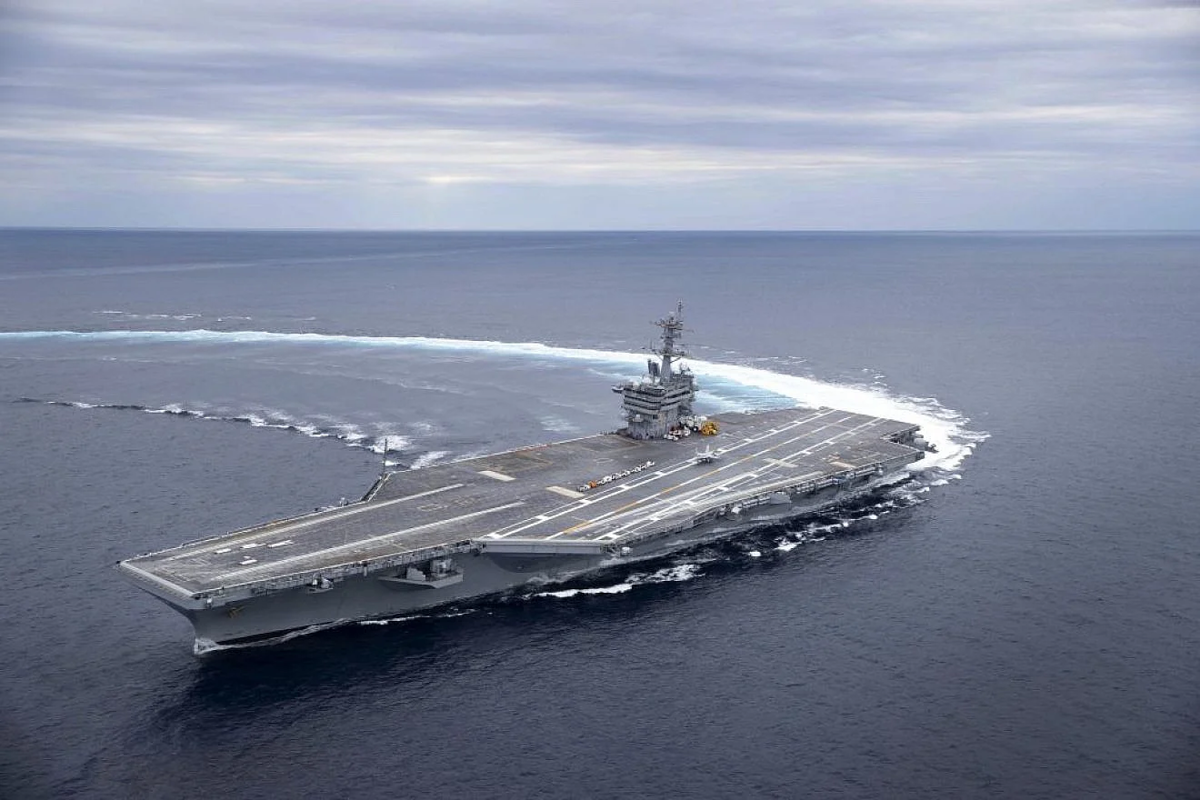
The crisis between the United States and Iran has entered a decisive phase, marked by an accelerated concentration of U.S. military forces in the Middle East and increasingly explicit threats from President Donald Trump, pointing to a drastic change in the conduct—or even the survival—of the Iranian regime. From this moment on, in security circles, it is interpreted that Trump will start an 'hourglass' clock that will lead to an irreversible decision. According to coinciding assessments in Washington and Jerusalem, the White House is considering three main options. The first, and the most extreme, would be a broad military action aimed at dismantling or overthrowing the Iranian regime, a scenario that would imply a direct and prolonged confrontation. The second alternative contemplates a pinpoint and surgical attack, intended to send an unequivocal signal to Tehran about the limits of its regional action, without seeking an immediate regime change. The third option would be an explicit threat accompanied by an ultimatum: to accept a new agreement under strict conditions or face a military offensive with lethal consequences. In this context, the Israel Defense Forces are preparing differently for each of these scenarios. According to sources from the Israeli security system, the prevailing working hypothesis is that Trump would be inclined to 'go for it all,' which would immediately raise the risk of a direct Iranian retaliatory attack against Israel. That response could materialize through missile launches from Iranian territory or through its regional allies, dragging the region into a large-scale conflict. One of the most sensitive factors in Israeli calculations is the possible intervention of Hezbollah, which has a significant arsenal in southern Lebanon and whose entry into an open conflict would expand the theater of operations to multiple fronts. In Jerusalem, it is assumed that, in the face of a massive U.S. attack, Iran would try to activate all its deterrent instruments, including its regional proxies. The scenario of a limited attack, on the other hand, poses different questions. In the coming days, and particularly within an estimated 48-hour period, Washington is expected to announce the completion of its military preparations in the region, a step that could activate a high-impact global strategic definition. The central milestone of this stage will be the arrival of the USS Abraham Lincoln aircraft carrier to the area of responsibility of U.S. Central Command, which will consolidate a deployment that military analysts describe as suitable for both limited operations and a large-scale campaign. The combination of military deployment, tough rhetoric, and the absence of clear signals about Trump's final choice keeps allies and adversaries alike on edge. Analysts wonder to what extent Iran would be willing to absorb a limited blow without responding directly, and whether the Supreme Leader, Ali Khamenei, would consider it prudent to avoid an escalation that could lead to an uncontrollable domino effect.