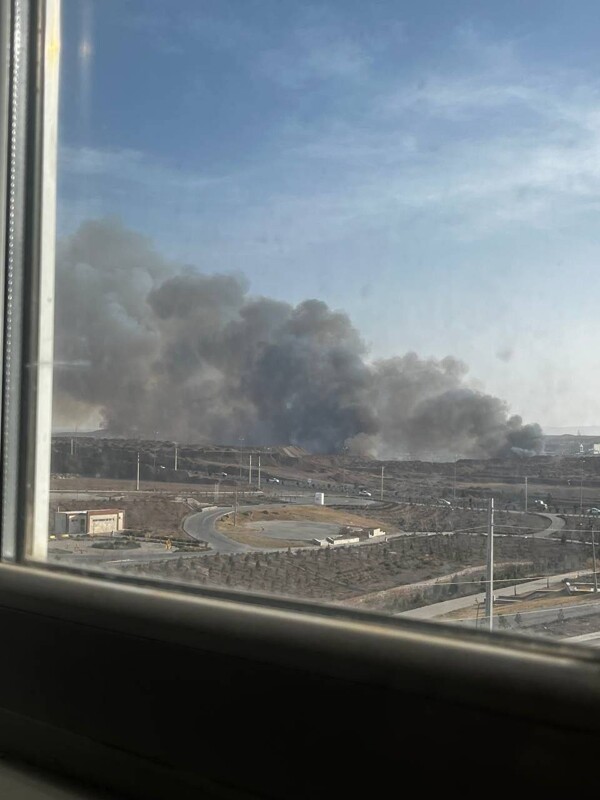
November 17, 2025, Negev - Total News Agency (TNA). Israel's National Security Minister, Itamar Ben Gvir, immediately traveled to the Negev region following an incident of intense gunfire reported overnight near the Jewish community of Retamim.
The proximity of these events to rural Jewish communities, which are relatively isolated and have limited defense infrastructure, further elevates the government's sensitivity. Ben Gvir, who has made internal security a cornerstone of his administration, plans to meet with police and border police commanders to assess the extent of the exchange of fire on the ground and what immediate measures will be deployed to prevent new attacks.
His presence, according to security sources, is intended to send a political and operational message: to reinforce the state's presence and make it clear that armed attacks—whether motivated by crime, tribalism, or nationalism—will not go unanswered.
In recent weeks, various internal reports have warned of an increase in illegal activities in areas where police control is limited. While civil defense groups are calling for a much firmer state presence, Bedouin organizations and leaders warn of the need to address the root causes—including poverty, lack of opportunities, and identity tensions—to prevent the spiral of violence from deepening.
Ben Gvir's visit, although no official decisions have been communicated yet, marks a turning point in how these incidents are handled, which are now considered direct threats to national security and not just isolated events in a historically conflict-ridden region.
The incident is part of a pattern of intermittent but persistent violence that, over the past decade, has turned the Negev into an area where the law seems to operate with less force than in the rest of the country, fueling smuggling networks, organized crime, territorial disputes, and episodes of armed intimidation.
Ben Gvir's decision to travel to the site in person is a clear indication that the Israeli government does not intend to frame the incident as just another episode in the complex dynamics of the south.
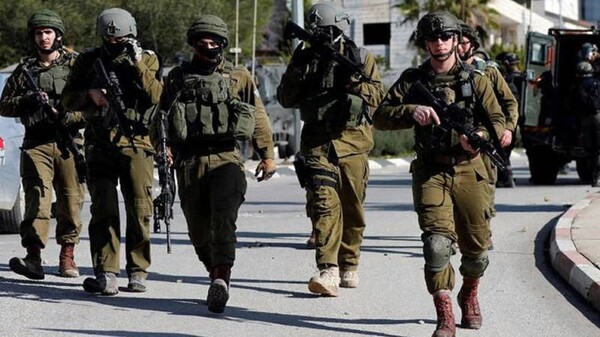
Although technical details have not yet emerged, sources close to the ministry suggest that an operational reinforcement in the area, expanded patrols, and greater control over villages identified as hotbeds of armed activity could be ordered.
In parallel, government sectors have insisted on the need to advance structural reforms to restore the state's authority in the Negev.
According to initial local reports, the gunfire appears to have originated from the Bedouin village of Bir Hadaj, a flashpoint within the vast semi-desert territory where criminal groups, Bedouin clans, and small Jewish populations have coexisted for years amidst tensions.
Residents of Retamim described the situation as a 'massive bombardment,' a continuous succession of bursts that generated fear and forced families to take shelter. Among the phenomena cited are arms trafficking, the expansion of criminal cells, and the growing capacity of local groups to openly challenge the authorities.
For the local population, every episode of violence renews the feeling of vulnerability and abandonment by national institutions. The incident also rekindles the political debate over the situation in the Negev, a territory key to Israel's strategic development and, at the same time, one of the most difficult to administer.
Historical land disputes, lack of infrastructure, weak institutional presence, and the penetration of organized crime have created an ecosystem where risks can escalate rapidly. In the coming hours, a formal statement with the first measures adopted after the on-site assessment is expected.