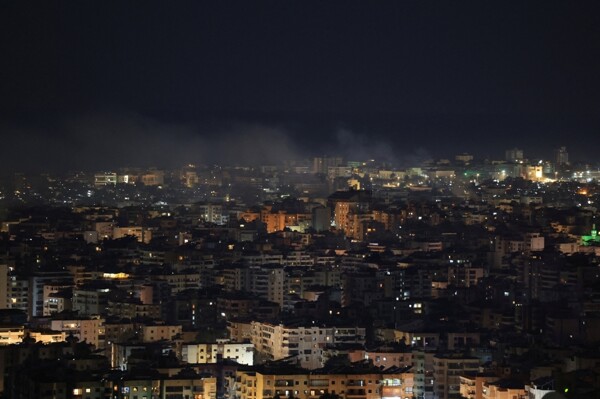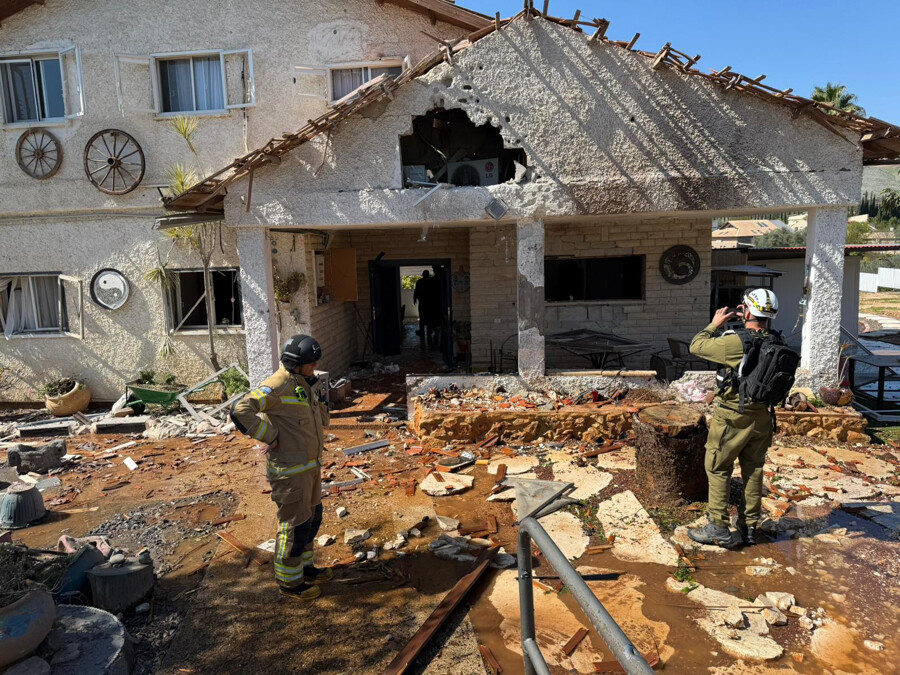
Northern Israel is under threat from Iran and the Lebanese Shiite militia Hezbollah. In the city of Haifa, the largest in the north, residents are looking to the sky more than anywhere else in the country due to the dual threat they have faced for the past few days: attacks from Iran and their neighbor, the Hezbollah militia. 'Do you see that dot over there? The Israeli fighter jets we're hearing are probably heading there,' explains EFE Sam, an 81-year-old Israeli, from a viewpoint with a privileged view of the city. With the Israeli and US bombings against Iran, which began on Saturday morning, this northern city has remained on alert due to the arrival of ballistic missiles from the ayatollahs' regime. Since Monday, its residents have also had to deal with Hezbollah attacks, which had already been attacking northern Israel since the start of the Israeli offensive in Gaza in October 2023 until November 2024, when it signed a truce with Israel. 'It's clear that the Iranians have encouraged Hezbollah to attack us again,' Sam says about the Shiite militia wanting to join this new regional war. This double danger is reflected in the streets of Haifa, where few people are seen walking and most shops are closed. Since the truce, the Israeli Army has continued to bomb the neighboring country's south. The Lebanese group justified its participation in this regional war 'as revenge' after the death of Iranian leader Ali Khamenei was confirmed by the Israeli Army. At least five people were injured by shrapnel from the latest barrage of missiles launched by Iran against the country that fell in central Israel, Israeli emergency services reported. 'It's suicide for the Lebanese to be attacking us now,' he says while preparing the orders his customers make online. This Tuesday, Israel increased its attacks on Beirut as Israeli Prime Minister Benjamin Netanyahu again insisted that he will attack Iran 'with even greater force' and the Lebanese Shiite militia. 'If the sirens sound, I strongly recommend that you go to the nearest shelter. If not, Israel will take care of it. The Lebanese government must ensure that Hezbollah disappears. I fought in the Six-Day War (1967), the Yom Kippur War (1973), and the first Lebanon War (1982),' he recounts. And, as if he had summoned them, just a few minutes after making this statement, air raid sirens are activated in Haifa. 'After the sirens that sounded in the north and center of Israel, several projectiles were identified that crossed from Lebanon into Israeli territory. Most were intercepted, and one fell in an open area,' the Israeli Army clarified shortly after. In this case, because the north of the country is so close to Lebanon, Israel does not have enough time to send an earlier warning, as happens when the Army detects missile launches from Iran, so in this area the sirens go off when the attacks arrive, or sometimes not even then. Residents have one to two minutes to run to shelter. 'I have to work. I need to work. I'm not afraid and I trust my country's air defense. At my age and with everything I've lived through, I don't need to take shelter,' he says. Only a few, like Amir's hot dog stand, remain open for a few hours a day.