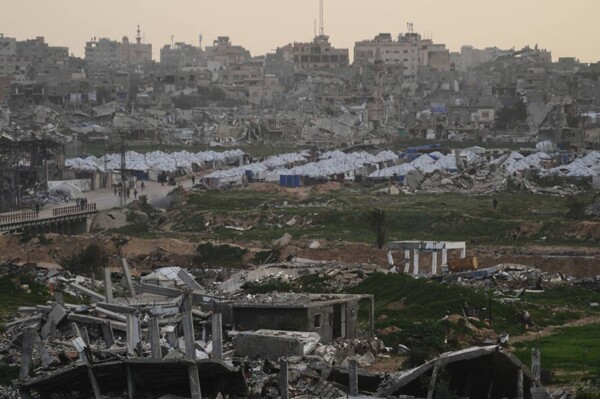
In this text, I want to address the exogenous factors that I perceive surround this Peace Plan. Two of them are the Abraham Accords and the Zionist project known as Greater Israel. In 2020, three Arab countries established diplomatic, political, and even commercial relations with Israel: the United Arab Emirates, Bahrain, and Morocco, to which Sudan later joined. The outcome for the Gaza peace plan will condition the future of both the Abraham Accords and the Greater Zionist Israel project. This rapprochement between Arabs and Israelis changed the geopolitical scheme of the Middle East, as previously the stance in the Arab world was not to make peace with Israel separately until the territories occupied after 1967 were reversed. Meanwhile, the Israel Defense Forces are supporting the Druze in combat with state forces. I defend this hypothesis as follows: with this, the future of a Palestinian state with the West Bank and Gaza is buried. Currently, Iraq and Syria are embroiled in a civil war between sectarian groups that have turned them into failed states, leaving Iran as the sole leader of the anti-Zionist resistance. Now that Bashar Al-Assad has fallen in Syria —for which Israel armed the militia groups involved in his downfall— the government of Benjamin Netanyahu has initiated talks with the new ruler to normalize ties. It should be noted that the Camp David Accords of 1979, in which Egypt agreed to peace with Israel, inspired some brief rapprochements between both sides until the so-called Abraham Accords. The second is the Greater Israel Project, which is nothing more than the upper phase of the colonial stage of Zionist doctrine, which extends its basis of finding a home for Jews in Palestine by adding to it part of Egypt, Jordan, southern Lebanon, Syria, Iraq, and Saudi Arabia, i.e., the countries geographically located between the Nile and the Euphrates. Likewise, the fall of Israel's former enemies, namely the regime of Saddam Hussein in Iraq and that of Assad in Syria, greatly influences the future of these events, as these two had enough military arsenal to contain Israel's imperial designs. Rubble after the destruction of the Al Sousi residential tower by the Israeli army. Within that strategy, Saudi Arabia cannot be missing, which currently coordinates security actions with Israel against the Ayatollah regime. In my humble opinion, Netanyahu's plan for the future will be to destabilize the Syrian government as much as possible, thus getting closer to its adversary Iran, while at the same time occupying more Syrian territory than it currently does: the Golan Heights. Israel's strategy will be to increase the fear that the Gulf States feel towards Iran, frightening them with possible military actions by Iran and its Houthi militias in the Strait of Hormuz or other actions, both military and non-military. This Zionist project to redraw the map of the Middle East has been announced in Israel by ultra-conservative religious groups and by the far right that today holds political power, which may increase the belief that this biblical message becomes a political project. Firstly, I must clarify that the Abraham Accords and the Greater Israel project are linked and aligned according to Israeli strategic objectives. Following the announcement of a ceasefire for the catastrophe in Gaza, sealed on October 11, 2025, messages about the future credibility of peace have resonated worldwide. On one hand, there are skeptics who assert that the conflicting positions on who will govern Gaza —contained in point 9 of the 20 proposed points— block the permanence of a definitive ceasefire, and on the other hand, perhaps the most incredulous hold faith that the agreement will be fully implemented. Personally, I lean towards being a skeptic and specifying that perhaps only the first phase of the agreement will be fulfilled, that is, the one concerning the exchange of hostages. If the 20 points on the negotiation table are analyzed, it is obvious that all of them have to do with the commitment of Israel and Hamas, regarding the Gaza Strip, leaving aside a clause of arbitration in which other countries commit to safeguarding this ceasefire. Until that happens, the state of war will be permanent.

Exogenous Factors of the Gaza Peace Plan
An analysis of the influence of the Abraham Accords and the 'Greater Israel' project on the future of Palestine and the geopolitical situation in the Middle East. The author examines how these factors could determine the fate of the peace process in Gaza.